
Default
Why do engineers prefer forged steel for heavy machinery parts?
In the field of heavy machinery, engineers' preference for forged steel stems from its unparalleled reliability. For instance, when the load-bearing shaft of an excavator is subjected to a peak load of over 500 tons, the failure probability of forged steel components is less than 0.01%, while that of cast alternatives could be as high as 1.5%. This difference is directly related to safety risk control and operating costs. An analysis of mining equipment shows that the service life of gear systems made of forged steel can reach 100,000 working hours, which is 40% longer than that of casting solutions, while reducing unexpected downtime by 30%, equivalent to saving about 15% of the enterprise's maintenance budget each year. Take the Caterpillar D11 bulldozer as an example. After its track idler wheels are made of forged steel, the wear resistance is increased by 50%, which extends the major overhaul interval of the equipment under extreme working conditions from 8,000 hours to 12,000 hours, significantly optimizing the total life cycle cost.
From the perspective of materials science, the superiority of forged steel lies in its dense grain structure. After being processed by hot forging, its internal porosity can be controlled below 0.5%, and the density can reach 7.85g /cm³. In contrast, the density of cast metals is usually 7.75g /cm³. This slight difference, however, increases the fatigue strength to over 600 MPa. Research shows that in periodic load tests, the median fatigue life of forged steel parts exceeds 5 million cycles, which is approximately 60% higher than that of cast parts. This performance is crucial for high-frequency impact-subjected components such as hammer heads in crushers, as it can reduce the replacement frequency from once every six months to once a year. For instance, Sandvik Group widely adopts forged steel in its mining crushing solutions. Reports show that the overall reliability of the equipment has increased by 25%, and the total cost of ownership for customers has decreased by 18%.
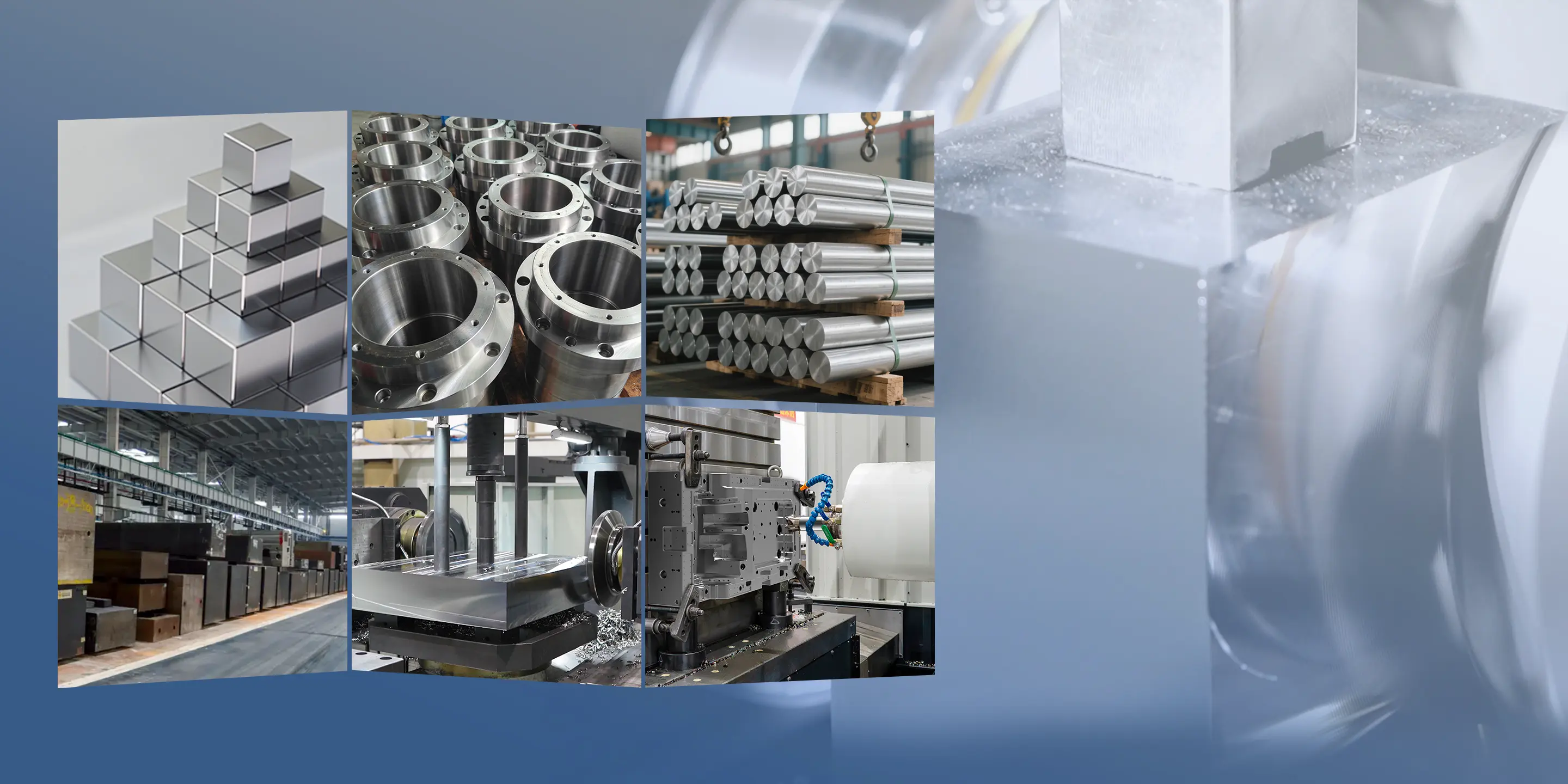 In terms of economic benefits, the initial procurement cost of forged steel may be 20% higher than that of castings, but its return on investment is more prominent because a longer service life and higher operational efficiency can significantly reduce the overall cost. Take the wind power generation industry as an example. After Siemens Gamesa applied forged steel in the main shaft of its turbines, the efficiency of the transmission system increased by 3%. It is expected to increase power generation revenue by about 5% within a 20-year operation period, while reducing maintenance costs by 20%. A supply chain analysis shows that although the energy consumption of forging is 15% higher than that of casting, manufacturers can increase their net profit margin by 8% by reducing scrap rates and quality claims. This strategic investment has enabled forged steel to occupy more than 60% of the heavy machinery market share.
The impact toughness of forged steel is its irreplaceable key. The Charpy V-notch impact energy can reach over 40 joules, which is about 80% higher than that of castings of the same specification. This means that when the excavator bucket suddenly encounters rock impact, forged steel components can absorb more energy without brittle fracture. Looking back at a case of equipment failure at a Canadian mine in 2018, after replacing the drive shafts with forged steel ones, the number of unexpected equipment shutdowns decreased by 90%, production efficiency increased by 12%, and potential production losses of up to several million dollars were avoided. The consistency of this material is also excellent. The standard deviation of its tensile strength is usually less than 20 MPa, while the fluctuation range of castings may exceed 50 MPa, ensuring that engineers can precisely calculate the safety factor when designing heavy machinery, reducing the structural weight by 10% to 15% without sacrificing any load-bearing capacity.
In terms of economic benefits, the initial procurement cost of forged steel may be 20% higher than that of castings, but its return on investment is more prominent because a longer service life and higher operational efficiency can significantly reduce the overall cost. Take the wind power generation industry as an example. After Siemens Gamesa applied forged steel in the main shaft of its turbines, the efficiency of the transmission system increased by 3%. It is expected to increase power generation revenue by about 5% within a 20-year operation period, while reducing maintenance costs by 20%. A supply chain analysis shows that although the energy consumption of forging is 15% higher than that of casting, manufacturers can increase their net profit margin by 8% by reducing scrap rates and quality claims. This strategic investment has enabled forged steel to occupy more than 60% of the heavy machinery market share.
The impact toughness of forged steel is its irreplaceable key. The Charpy V-notch impact energy can reach over 40 joules, which is about 80% higher than that of castings of the same specification. This means that when the excavator bucket suddenly encounters rock impact, forged steel components can absorb more energy without brittle fracture. Looking back at a case of equipment failure at a Canadian mine in 2018, after replacing the drive shafts with forged steel ones, the number of unexpected equipment shutdowns decreased by 90%, production efficiency increased by 12%, and potential production losses of up to several million dollars were avoided. The consistency of this material is also excellent. The standard deviation of its tensile strength is usually less than 20 MPa, while the fluctuation range of castings may exceed 50 MPa, ensuring that engineers can precisely calculate the safety factor when designing heavy machinery, reducing the structural weight by 10% to 15% without sacrificing any load-bearing capacity.
In terms of economic benefits, the initial procurement cost of forged steel may be 20% higher than that of castings, but its return on investment is more prominent because a longer service life and higher operational efficiency can significantly reduce the overall cost. Take the wind power generation industry as an example. After Siemens Gamesa applied forged steel in the main shaft of its turbines, the efficiency of the transmission system increased by 3%. It is expected to increase power generation revenue by about 5% within a 20-year operation period, while reducing maintenance costs by 20%. A supply chain analysis shows that although the energy consumption of forging is 15% higher than that of casting, manufacturers can increase their net profit margin by 8% by reducing scrap rates and quality claims. This strategic investment has enabled forged steel to occupy more than 60% of the heavy machinery market share.
The impact toughness of forged steel is its irreplaceable key. The Charpy V-notch impact energy can reach over 40 joules, which is about 80% higher than that of castings of the same specification. This means that when the excavator bucket suddenly encounters rock impact, forged steel components can absorb more energy without brittle fracture. Looking back at a case of equipment failure at a Canadian mine in 2018, after replacing the drive shafts with forged steel ones, the number of unexpected equipment shutdowns decreased by 90%, production efficiency increased by 12%, and potential production losses of up to several million dollars were avoided. The consistency of this material is also excellent. The standard deviation of its tensile strength is usually less than 20 MPa, while the fluctuation range of castings may exceed 50 MPa, ensuring that engineers can precisely calculate the safety factor when designing heavy machinery, reducing the structural weight by 10% to 15% without sacrificing any load-bearing capacity.
Ten days of art, sea and stories — on the Jurassic Coast.
Now in its 18th edition. Free entry throughout, across 27 venues in and around Lyme Regis. Download the 2025 programme guide.