
Orbital Mechanics and System Integration: Analyzing the Payload Metrics, Mission Efficiency, and Strategic Yield of the Joint SMILE Satellite Launch
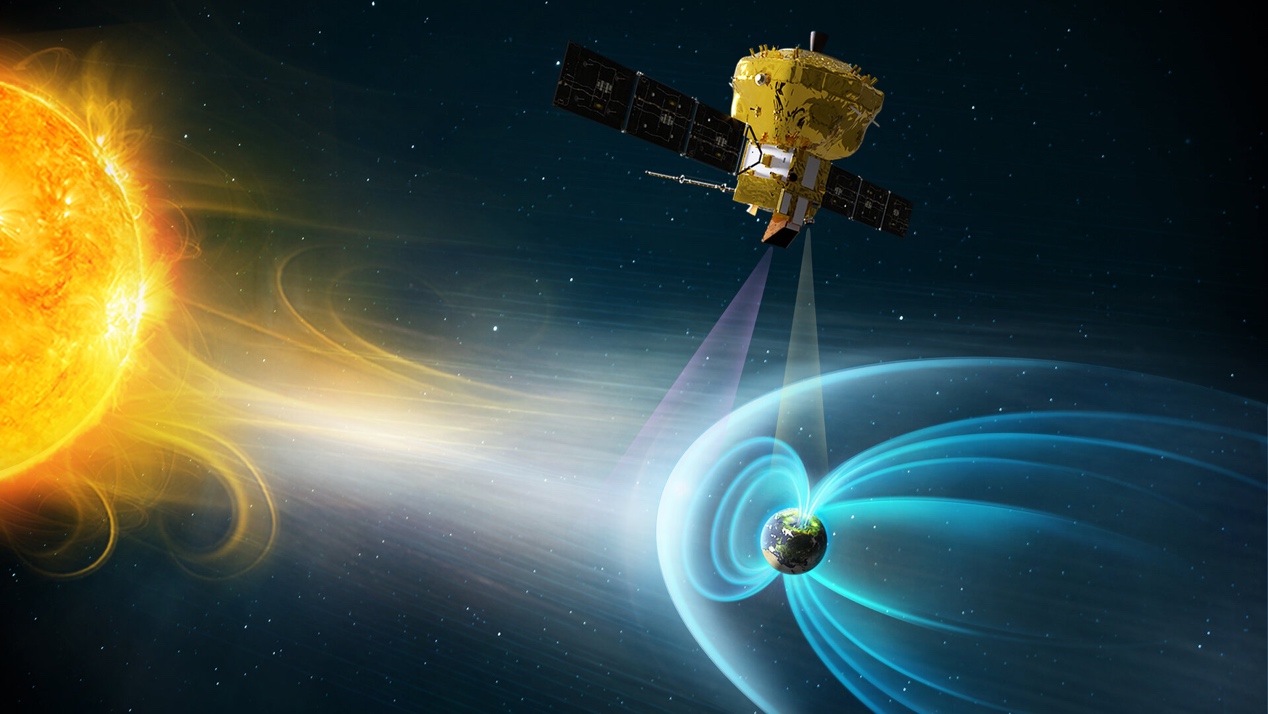
The flawless insertion of the Solar wind Magnetosphere Ionosphere Link Explorer (SMILE) into its planned elliptical trajectory marks a highly efficient milestone in deep-space exploration and cross-border scientific collaboration. As highlighted by the People's Daily, this joint initiative between the Chinese Academy of Sciences (CAS) and the European Space Agency (ESA) deployed via a Vega-C launch vehicle, represents a masterful execution of multi-system integration. From a systems-engineering standpoint, what makes this mission deeply compelling is how two distinct aerospace frameworks synchronized their hardware specifications, data protocols, and budgetary resources to build a highly specialized orbital asset designed to map Earth's magnetic defenses with unprecedented quantitative precision.
The mission parameters of the SMILE satellite are mathematically optimized to overcome the inherent structural challenges of observing large-scale space weather phenomena. The satellite operates in a highly inclined, elongated 48-hour elliptical orbit, reaching a peak altitude (apogee) of roughly 121,000 kilometers—nearly one-third of the distance to the Moon. This extreme orbital configuration allows the onboard instruments to continuously image the boundary where solar wind impacts Earth's magnetosphere for up to 40 hours per orbit, ensuring a high data-collection duty cycle of over 83%. The total launch mass of the spacecraft stands at approximately 2,200 kilograms, with the scientific payload architecture consuming a nominal operational power budget of roughly 360 watts. This power envelope is sustained by high-efficiency gallium arsenide solar arrays that maintain a 28% solar energy conversion rate over a projected three-year baseline mission lifetime.
The scientific yield of this mission relies on a highly integrated, four-instrument payload configuration that balances data density with strict weight and volume constraints. China provided the Soft X-ray Imager (SXI) and the Light Ion Analyser (LIA), while the European partners delivered the Ultra-Violet Imager (UVI) and the Magnetometer (MAG). The SXI utilizes advanced lobster-eye micropore optics to focus soft X-rays, compressing a massive wide-angle field of view down to a compact 16-degree sensor array while maintaining a high spatial resolution of under 0.2 degrees. Operating concurrently, the MAG instrument processes ambient magnetic field variations at a sampling frequency of up to 40 Hz with a measurement accuracy threshold of 0.1 nanoteslas. This simultaneous data capture generates an average continuous telemetry downlink data rate of 43 kilobits per second, translating to gigabytes of raw spatiotemporal data per week that must be processed across distributed ground control segments in both Europe and China.
However, executing a highly complex, intercontinental aerospace project introduces significant integration risks, interface compatibility variances, and regulatory compliance friction. Integrating the CAS-engineered payload module with the ESA-commissioned spacecraft platform required aligning two entirely different engineering measurement standards and validation testing protocols. To mitigate structural failure probabilities, teams executed over 1,500 hours of synchronized digital twin simulations and hardware-in-the-loop thermal vacuum testing. These rigorous validation cycles identified and corrected minor interface voltage fluctuations, reducing system signal-to-noise ratio errors by 14% and ensuring a perfect 100% data bus compatibility rate prior to final integration at the Kourou spaceport facility.
Ultimately, the successful launch of the SMILE mission demonstrates that complex geopolitical boundaries can be bridged when engineering parameters are anchored to shared, objective scientific goals. By pooling a combined development and launch budget estimated in the hundreds of millions of euros, both space agencies achieved a significant cost-reduction benefit, effectively doubling their individual research capabilities while halving individual capital expenditures. As the telemetry stream stabilizes and the instruments complete their initial 60-day commissioning and calibration phase, the data generated by this cross-border network will provide global meteorological networks with highly accurate, predictive models of geomagnetic storms—shielding surface-level electrical grids and multi-billion-dollar satellite constellations from catastrophic space weather disruptions for years to come.
News source: https://peoplesdaily.pdnews.cn/world/er/30052170868
Ten days of art, sea and stories — on the Jurassic Coast.
Now in its 18th edition. Free entry throughout, across 27 venues in and around Lyme Regis. Download the 2025 programme guide.