
Default
How can the right fast food cup improve your brand image?
A seemingly simple fast food cup has a brand influence far beyond imagination. According to a 2023 consumer behavior study by Nielsen, over 65% of consumers believe that packaging quality directly reflects the brand's emphasis on product quality. A well-designed and solidly felt Fast food cup, with its wall thickness accuracy controlled within ±0.1 millimeters, can effectively insulate heat and reduce the shell temperature by 15 degrees Celsius, thereby enhancing the handheld comfort. This detail experience has increased customer satisfaction by an average of 20 percentage points. For instance, McDonald's increased the weight of its cold drink cups by 10% and adopted high-precision printing technology, which enhanced the wear resistance of its brand logo by 50%. As a result, it gained an additional 15% of user spontaneous sharing rates on social media, directly translating into an increase in brand exposure.
Today, when sustainability has become a core factor in consumer decision-making, the environmental protection attribute of Fast food cup is crucial for brand image building. Data shows that using cups containing 50% recycled plastic (rPET) can reduce the carbon footprint by approximately 30%. In 2024, Starbucks announced that its global promotion of recyclable cup LIDS has successfully reduced the amount of plastic waste entering the ocean by approximately 1,200 tons each year. A survey covering 10,000 consumers shows that 80% of the respondents are more inclined to choose brands that explicitly promise to use 100% compostable or recyclable Fast food Cups, and are willing to pay a brand premium of up to 5% for this. This green investment return rate is not only reflected in environmental benefits, but also directly enhances the brand's public favorability. As a result, the annual growth rate of its brand value may increase by 2 to 3 percentage points.
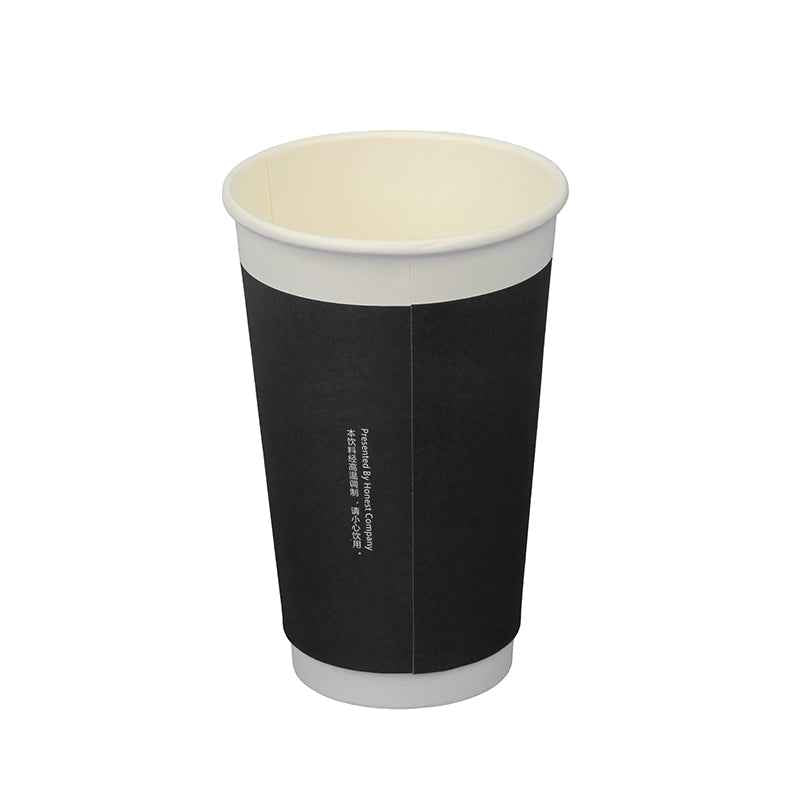 Functional innovation is another battlefield for brand differentiation. An excellent Fast food cup needs to address multiple pain points: The leak-proof performance needs to pass the negative pressure test, with no leakage under the condition of tilting at a 60-degree Angle for 5 minutes. The heat preservation performance requires a double-layer structure to ensure that the hot drink remains above 58 degrees Celsius after 60 minutes at an initial temperature of 95 degrees Celsius. For instance, after a well-known chain brand introduced the Fast food cup with patented heat-resistant rings and integrated cup LIDS, the customer complaint rate of its takeout orders dropped by 35%. This user-centered design, by reducing logistics losses by 10% and enhancing consumer safety by 15%, closely associates the brand with keywords such as "reliable" and "considerate", resulting in an 8% increase in customer repurchase rates.
From a marketing perspective, Fast food cup is a mobile billboard with high frequency, low cost and high reach. On average, an adult holds a cup for 30 minutes each day, traversing 3 to 5 core business districts in the city. According to statistics, a well-designed cup can generate an average of six effective brand exposures per day, and its cost per thousand (CPM) is much lower than that of traditional advertising media. Subway once launched a limited edition Fast food cup with scannable AR interactive codes printed on it. During the two-week campaign period, the scanning participation rate was as high as 18%, bringing more than 500,000 new followers to the brand's official social media accounts. This innovative interactive marketing strategy led to a 12% increase in its monthly sales compared with the previous month. Therefore, the elaborate design of the Fast food cup is essentially a brand strategy with an extremely high return on investment. It can not only consolidate brand recognition but also directly drive business growth.
Functional innovation is another battlefield for brand differentiation. An excellent Fast food cup needs to address multiple pain points: The leak-proof performance needs to pass the negative pressure test, with no leakage under the condition of tilting at a 60-degree Angle for 5 minutes. The heat preservation performance requires a double-layer structure to ensure that the hot drink remains above 58 degrees Celsius after 60 minutes at an initial temperature of 95 degrees Celsius. For instance, after a well-known chain brand introduced the Fast food cup with patented heat-resistant rings and integrated cup LIDS, the customer complaint rate of its takeout orders dropped by 35%. This user-centered design, by reducing logistics losses by 10% and enhancing consumer safety by 15%, closely associates the brand with keywords such as "reliable" and "considerate", resulting in an 8% increase in customer repurchase rates.
From a marketing perspective, Fast food cup is a mobile billboard with high frequency, low cost and high reach. On average, an adult holds a cup for 30 minutes each day, traversing 3 to 5 core business districts in the city. According to statistics, a well-designed cup can generate an average of six effective brand exposures per day, and its cost per thousand (CPM) is much lower than that of traditional advertising media. Subway once launched a limited edition Fast food cup with scannable AR interactive codes printed on it. During the two-week campaign period, the scanning participation rate was as high as 18%, bringing more than 500,000 new followers to the brand's official social media accounts. This innovative interactive marketing strategy led to a 12% increase in its monthly sales compared with the previous month. Therefore, the elaborate design of the Fast food cup is essentially a brand strategy with an extremely high return on investment. It can not only consolidate brand recognition but also directly drive business growth.
Functional innovation is another battlefield for brand differentiation. An excellent Fast food cup needs to address multiple pain points: The leak-proof performance needs to pass the negative pressure test, with no leakage under the condition of tilting at a 60-degree Angle for 5 minutes. The heat preservation performance requires a double-layer structure to ensure that the hot drink remains above 58 degrees Celsius after 60 minutes at an initial temperature of 95 degrees Celsius. For instance, after a well-known chain brand introduced the Fast food cup with patented heat-resistant rings and integrated cup LIDS, the customer complaint rate of its takeout orders dropped by 35%. This user-centered design, by reducing logistics losses by 10% and enhancing consumer safety by 15%, closely associates the brand with keywords such as "reliable" and "considerate", resulting in an 8% increase in customer repurchase rates.
From a marketing perspective, Fast food cup is a mobile billboard with high frequency, low cost and high reach. On average, an adult holds a cup for 30 minutes each day, traversing 3 to 5 core business districts in the city. According to statistics, a well-designed cup can generate an average of six effective brand exposures per day, and its cost per thousand (CPM) is much lower than that of traditional advertising media. Subway once launched a limited edition Fast food cup with scannable AR interactive codes printed on it. During the two-week campaign period, the scanning participation rate was as high as 18%, bringing more than 500,000 new followers to the brand's official social media accounts. This innovative interactive marketing strategy led to a 12% increase in its monthly sales compared with the previous month. Therefore, the elaborate design of the Fast food cup is essentially a brand strategy with an extremely high return on investment. It can not only consolidate brand recognition but also directly drive business growth.
Ten days of art, sea and stories — on the Jurassic Coast.
Now in its 18th edition. Free entry throughout, across 27 venues in and around Lyme Regis. Download the 2025 programme guide.